



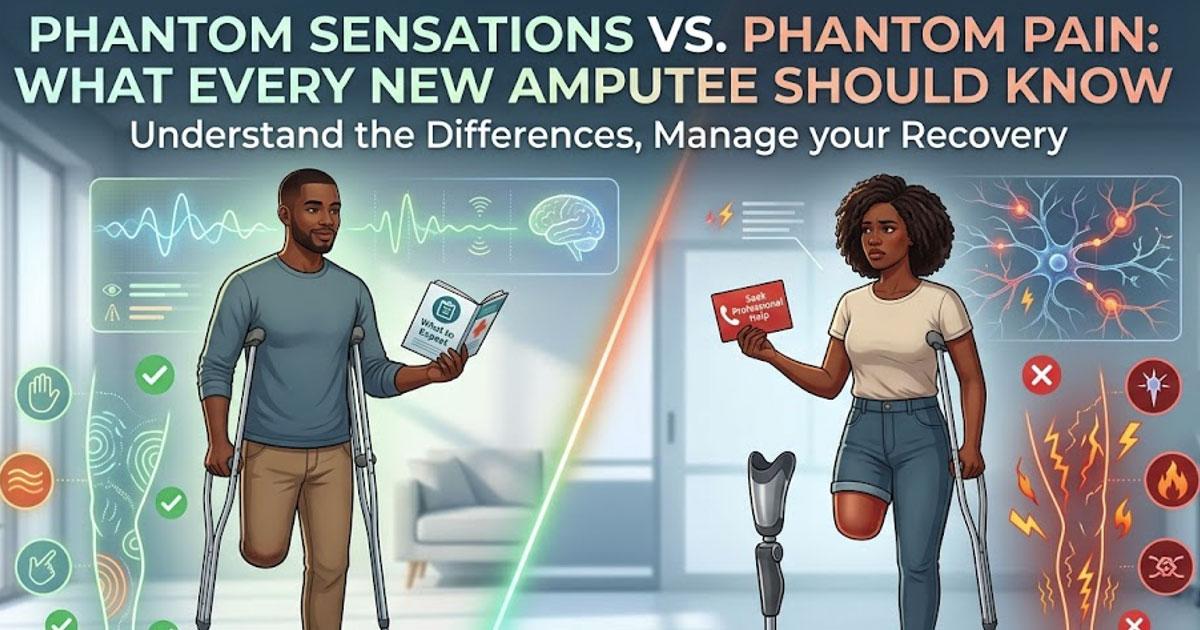

One of the strangest parts of life after amputation is realizing your limb still feels like it’s there. For many new amputees, this experience can be confusing, frustrating, and sometimes even frightening. The truth is, what you’re feeling is completely normal—and understanding what’s happening can make a huge difference in how you cope with it.
There’s an important difference between phantom sensations and phantom pain, and learning that difference early can help you feel more in control of your recovery.
Phantom Sensations Are Normal—and Very Common
Phantom sensation is exactly what it sounds like. It’s the feeling that your missing limb is still present in some way. Many amputees describe feeling:
- toes moving
- itching that can’t be scratched
- pressure where the limb used to be
- the sense that the foot or hand is still resting in a certain position
These sensations are not a problem or a setback. They’re simply your brain adjusting to a major change.
Your brain spent your entire life receiving signals from that limb. It doesn’t instantly “turn off” those pathways after surgery. Instead, it slowly learns to adapt over time.
Phantom Pain Feels Different—and Can Be More Challenging
Phantom pain is different from phantom sensation because it actually hurts. Some people experience:
- burning feelings
- sharp electrical-type pain
- cramping
- stabbing sensations
Not every amputee experiences phantom pain, but many do at some point during recovery. It can come and go without warning and sometimes shows up more at night or during periods of stress.
The important thing to know is that phantom pain is real. It’s not imagined, and it’s not something you’re doing wrong.
Why These Feelings Happen
Your nervous system doesn’t stop working just because a limb is gone. The brain still expects signals from that area, and when those signals change suddenly, it creates confusion in the system.
Think of it like a phone that keeps ringing even after someone hangs up on the other end. The connection changed, but your brain hasn’t fully adjusted yet.
Over time, many amputees notice these sensations become less intense or less frequent.
Things That Can Help Reduce Phantom Pain
Everyone’s experience is different, but there are some strategies many amputees find helpful:
- wearing your shrinker as recommended
- keeping your residual limb supported comfortably
- staying consistent with physical therapy exercises
- gentle massage (when approved by your care team)
- staying active when possible
Sometimes just understanding what’s happening reduces anxiety, which can reduce symptoms too.
You’re Not Alone If This Is Happening to You
One of the biggest surprises after my amputation was realizing how many things nobody tells you ahead of time. Phantom sensations were definitely one of them.
If you’re experiencing this right now, you’re not doing anything wrong. Your body is adjusting. Your brain is adapting. And this is part of the process for many of us.
Recovery after amputation isn’t just physical—it’s neurological and emotional too. The more you learn about what’s happening, the easier it becomes to move forward with confidence. 💬