



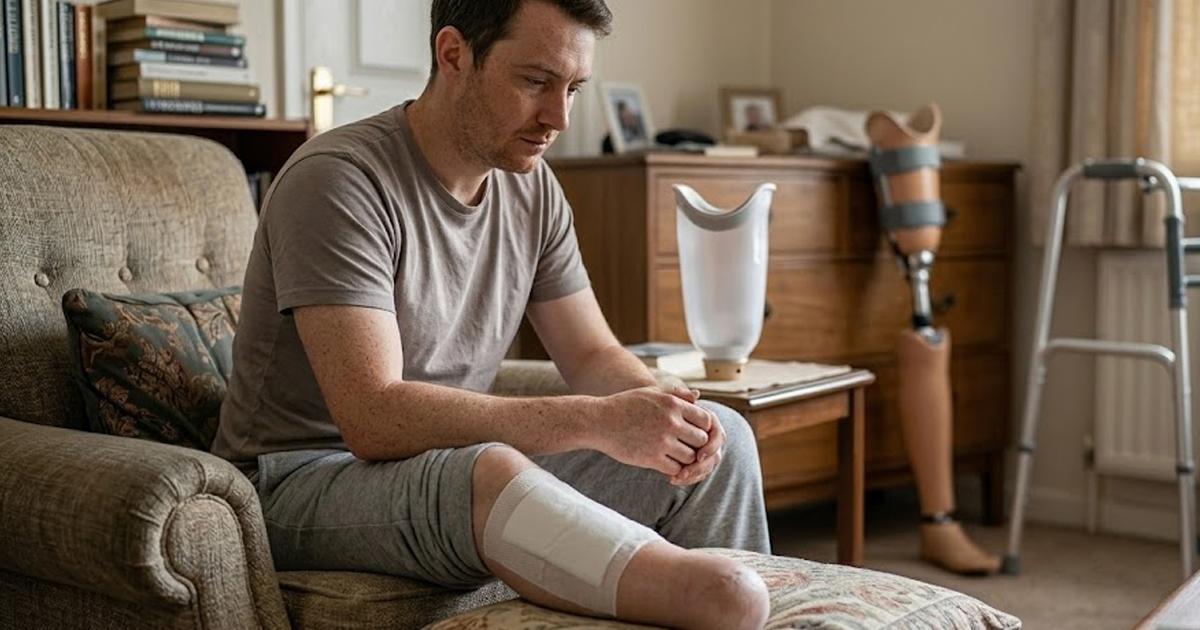

When people think about amputation, they often imagine the surgery itself as the biggest hurdle. But what many new amputees quickly learn is that the real journey begins after leaving the hospital. The first few weeks can feel overwhelming, confusing, and emotionally intense all at the same time.
That’s one of the reasons I started sharing my journey on Amputee Joe. There are a lot of things that happen during recovery that doctors and therapists simply don’t have time to explain in detail. Not because they don’t care, but because every amputee’s experience is different.
If you’re at the beginning of this journey, there are a few things I wish someone had explained to me early on.
Your Body Is Learning a Completely New Normal
After amputation, your body goes through a massive adjustment period. Not just physically, but neurologically as well. Your brain has spent your entire life understanding where your limb was and how it moved. Suddenly, that system has to be rewritten.
This is why sensations like phantom limb feelings are so common. Many amputees feel like their missing limb is still there. Sometimes it feels like the foot is curled, itching, or even moving. For some people it's mild. For others it can be intense.
At first it can be strange or even a little scary. But in most cases, these sensations are simply your brain adjusting to the change. Over time, many amputees learn ways to manage and reduce these sensations as the body adapts.
The Healing Process Takes Patience
One thing many people underestimate is how long healing can take. The body is doing a tremendous amount of work behind the scenes. Muscles are adjusting, nerves are calming down, and your residual limb is slowly reshaping.
This is where tools like shrinkers and proper compression become incredibly important. They help control swelling and shape the limb for a future prosthetic. It might seem like a small step, but it plays a big role in how comfortable and successful your prosthetic fitting will be later.
The challenge is that progress can feel slow. Some days feel like you’re moving forward, while others feel like nothing is happening at all. That’s normal. Recovery is rarely a straight line.
The Emotional Side Is Just as Real
Something that doesn’t get talked about enough is the emotional side of becoming an amputee. Losing a limb changes more than just mobility. It can change how you see yourself, how you interact with the world, and how you imagine the future.
Some days you may feel strong and optimistic. Other days you may feel frustrated or discouraged. Both are completely normal reactions. Adjusting to life as an amputee takes time, and everyone processes it differently.
What helps many people is connecting with others who have gone through the same experience. Knowing that someone else understands what you're dealing with can make the road ahead feel a little less lonely.
Progress Happens One Step at a Time
If you’re early in your recovery, it’s important to remember that every small step matters. Learning to move again, adapting to daily routines, and eventually working toward a prosthetic are all part of the process.
It may not feel like it in the moment, but progress is happening even on the difficult days.
The goal of Amputee Joe is to share the real side of this journey. The wins, the challenges, and everything in between. Because if you’re going through this right now, you should know one thing for sure.