



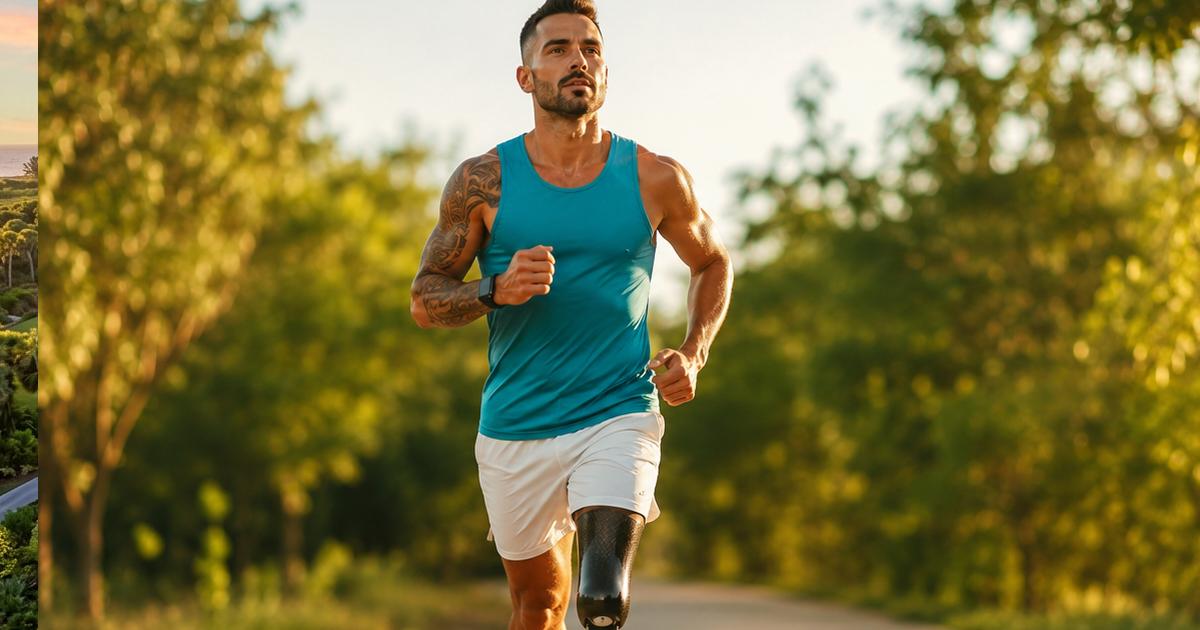

Before my amputation, I was never what you would call a gym rat. But I was active. I moved around, I worked, I stayed on my feet. When I woke up as a below-knee amputee three years ago, one of the heaviest questions sitting on my chest was not just will I walk again but will I ever really move again? Will I sweat, push myself, feel strong? Or is that chapter of my life just closed?
I am here to tell you that chapter is not closed. Not even close. But getting back to fitness as an amputee is its own journey, and it looks nothing like what I expected. There were setbacks, frustrations, and moments where I felt like my body was working against me. There were also breakthrough moments I will never forget. This post is about all of it.
Why Staying Active as an Amputee Matters More Than You Think
Here is something that took me a while to fully understand. As a below-knee amputee, your body is working harder than it used to just to do everyday things. Walking with a prosthetic burns more calories and demands more from your cardiovascular system than walking on two biological legs. That sounds like a win, but it also means your overall physical condition matters even more now than it did before your amputation.
When I was deconditioned, everything felt harder. My residual limb would fatigue faster. My balance was shakier. I got winded more easily. But as I slowly built up my strength and stamina, things that once felt exhausting started to feel manageable. The prosthetic felt like less of a burden and more like a tool I actually knew how to use.
Dede was a big part of keeping me accountable in those early months. She did not push me past my limits, but she would gently remind me that moving was healing. She was right.
The Mental Side of Getting Active Again
I want to be honest here. The mental barrier to exercise after amputation can be just as real as the physical one. I was afraid of falling. I was afraid of looking foolish. I was afraid of doing damage to my residual limb. Those fears are legitimate and you should not brush them off. But you also cannot let them permanently park you on the couch.
Start small. Seriously, embarrassingly small if you have to. My first real exercise goal was just walking to the end of my street and back. That was it. Some days even that was a victory worth celebrating. Build from there.
What Exercise Actually Looks Like for Me Now
Three years in, my routine looks completely different than it did when I first got my prosthetic. I have found things that work for my body, my lifestyle, and yes, my residual limb. Here is an honest picture of what staying active looks like for me in Cape Coral.
Walking is Still the Foundation
I know it sounds basic, but consistent walking is genuinely one of the best things I do for my overall health and my prosthetic use. Walking builds the muscles in my residual limb, keeps my cardiovascular system sharp, and keeps me dialed in to how my socket is fitting. I pay attention to how my leg feels during a walk in a way that helps me catch problems before they become serious.
I walk most mornings. Sometimes with Dede, sometimes with headphones in. The Florida heat means I go early before it gets brutal. If you are in a warmer climate, timing your walks right is a practical thing to figure out early.
Strength Training Changed Everything
About eight months after my amputation, my prosthetist and physical therapist both encouraged me to start incorporating some basic strength work. I was skeptical. But I am so glad I listened.
Building strength in my core, my hip flexors, my glutes, and my intact leg made a measurable difference in how I walked and how long I could stay on my prosthetic comfortably. A stronger body supports a better gait. Period.
I started with resistance bands at home. Nothing fancy. No gym membership required at first. Seated exercises, standing exercises with something nearby to hold onto, and slow progressions over time. I eventually joined a local gym and now I go a few times a week. I am not a bodybuilder. But I am stronger than I have been in years, and that matters.
Swimming and Water Exercise
Living in Florida, water is just part of life. I am going to do a deeper dive into waterproof prosthetics and swimming in a future post because it deserves its own conversation. But I will say here that getting into the water, whether the pool or the Gulf, has been one of the most freeing physical experiences I have had since my amputation. Swimming is low impact, it is full body, and it gives your residual limb a rest from the socket while still getting you moving. Highly recommend exploring this if you have access to water.
Tips for Starting an Exercise Routine as a New Amputee
If you are earlier in your journey and you are wondering where to even begin, here is what I would tell you based on everything I have learned and experienced.
- Talk to your physical therapist first. If you are still in PT or recently finished, your therapist is the best starting point. They know your specific situation and can guide you safely.
- Protect your residual limb above all else. If your skin is breaking down, if your socket is not fitting right, or if you are dealing with sores or irritation, exercise is on hold until that is addressed. Your limb health always comes first.
- Focus on what you can do, not what you cannot. There are seated exercises, upper body workouts, pool exercises, and plenty of options that do not require you to be fully prosthetic-ready. Work with what you have today.
- Track your progress, even casually. I started keeping simple notes on my phone about what I did each day. Looking back at those early entries and seeing how far I had come was one of the most motivating things I could have done for myself.
- Find an activity you actually enjoy. Exercise you hate is exercise you will quit. Try different things until something clicks. For me it ended up being walking, weights, and water. For you it might be cycling, yoga, or something else entirely.
- Be patient with your body. There will be days your residual limb is swollen or sore and you have to back off. That is not failure. That is just the reality of amputee life, and learning to listen to your body is a skill worth developing.
- Get a workout buddy if you can. Dede has joined me for walks more times than I can count. Having someone beside you makes a real difference, especially on the days you are tempted to skip it.
What I Know Now That I Did Not Know Then
Three years ago I genuinely did not know if I would ever feel physically capable again. I was wrong to doubt myself, but I understand why I did. Amputation shakes your confidence to the core, and that includes your confidence in your own physical ability.
What I know now is that your body is more adaptable than you give it credit for. The human body, even a changed one, wants to move and strengthen and recover. You just have to give it the right conditions and enough patience.
Fitness after amputation is not about getting back to who you were before. It is about building the strongest, most capable version of who you are right now. That shift in mindset made all the difference for me.
If you are just starting out or struggling to find your footing, hang in there. Keep moving when you can, rest when you need to, and never stop showing up for yourself. I am rooting for you every step of the way.