



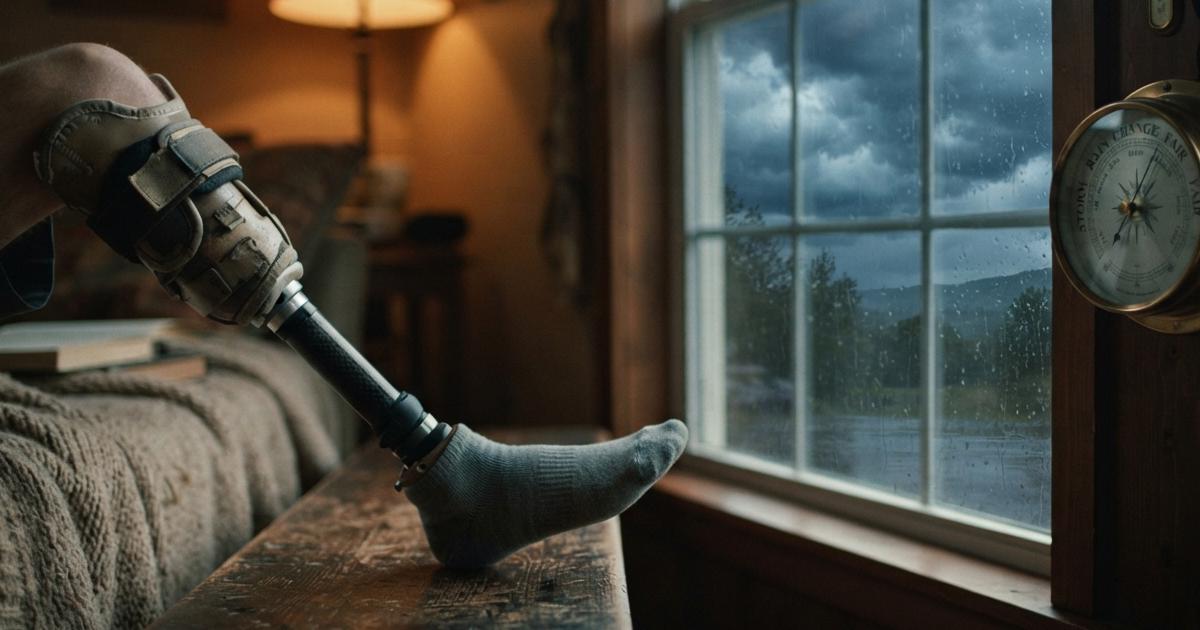

If you had told me before my amputation that I would one day be able to predict rain based on how my residual limb felt, I would have laughed. But here I am, a below-the-knee amputee living in Southwest Florida, and I can honestly say that my body has become one of the most reliable weather forecasts I own. It sounds strange, maybe even a little dramatic, but the connection between weather changes and how your residual limb feels is very real, and it is something a lot of amputees quietly deal with without fully understanding why.
Nobody really sat me down and explained this part. It was something I pieced together slowly over months of paying attention to my own body and talking to other amputees who were experiencing the same thing. So today I want to break it all down in a way that I wish someone had done for me early on.
Why Weather Actually Affects Your Residual Limb
To understand what is happening, it helps to have a basic picture of what your residual limb is made of and how it responds to the environment around it. After an amputation, your limb is a mix of healing or healed tissue, scar tissue, nerve endings, and blood vessels. It is sensitive in ways that the rest of your body simply is not, and it communicates that sensitivity loudly whenever conditions change.
Barometric Pressure and Tissue Sensitivity
Barometric pressure is the weight of the atmosphere pressing down on everything around us. When a storm system moves in, barometric pressure drops. When weather clears, it rises. For most people this is invisible and unfelt. For amputees, and for many people with chronic pain conditions, that pressure shift can cause real physical sensations.
The tissues in your residual limb, especially areas where nerves were cut and are still healing or regenerating, respond to these pressure changes. Some amputees describe it as a deep aching. Others feel increased phantom sensations. Some notice swelling or a change in how their socket fits. All of these are legitimate responses to what is happening in the atmosphere around you.
Temperature Swings and Socket Fit
Temperature changes are another big factor that does not get talked about enough. When temperatures drop, your residual limb can shrink slightly as blood vessels constrict in response to cold. This can make your socket feel loose and cause pistoning, which is that uncomfortable up and down movement inside the socket when you walk. On the flip side, heat causes swelling, and a limb that fitted perfectly in the morning can feel tight and uncomfortable by noon on a hot day.
Living in Florida, I deal with heat expansion constantly. But I have also had visits up north where the cold made my socket feel completely different. Understanding that this is a temperature response and not a random problem helped me stop panicking and start planning ahead.
What It Actually Feels Like Day to Day
Knowing the science is one thing. Living it is another. Here is an honest picture of what weather-related changes feel like when you are actually going through them.
The Aching Before a Storm
The feeling I get before a big storm rolls in is hard to describe but unmistakable once you have experienced it. It is a dull, deep ache that seems to come from inside the limb rather than from the skin surface. Sometimes it feels almost like pressure building up from the inside out. I have learned that when I feel this, there is a good chance rain is coming within the next several hours. My wife actually jokes that I am more reliable than the local news.
Increased Phantom Sensations
I have noticed that my phantom sensations get louder during weather changes. The tingling, the feeling that my foot is still there and doing something uncomfortable, all of it picks up intensity when barometric pressure shifts. This is frustrating because phantom sensations can interrupt sleep and focus. Being aware that weather is likely the trigger helps me manage my response to it instead of spiraling into worry.
Skin Irritation and Liner Issues
Changes in humidity affect how your liner interacts with your residual limb. High humidity means more sweating, and sweat under a liner creates friction, skin breakdown, and odor. When weather shifts rapidly, like when a cold front pushes through after days of humidity, the transition period can be particularly rough on skin integrity. I have had flare-ups of skin irritation that I could trace directly back to a weather transition rather than anything I had done wrong with my routine.
Practical Ways I Manage Weather-Related Changes
Over time I have built up a set of habits and tools that help me get ahead of weather-related issues rather than just reacting to them after they have already caused a problem.
Checking the Forecast Like It Matters
Because for me, it does. I check the weather every morning as part of my routine, the same way I check my residual limb skin. If I know a pressure system is moving in or temperatures are going to drop significantly, I plan accordingly. I might add a ply sock to account for anticipated shrinkage. I might bring extra liners or skin wipes if humidity is going to be high. Small adjustments made early make a big difference.
Keeping a Body Journal
I started keeping notes on how my limb felt on different days alongside what the weather was doing. It did not take long before patterns became obvious. This kind of tracking gives you real information about your own body that no doctor can fully provide because they are not living inside your experience. It also helps when you are talking to your prosthetist about fit issues, because you can point to specific conditions that cause specific changes.
Tools and Habits That Help
- Keeping extra prosthetic socks in different thicknesses on hand so you can adjust volume as conditions change
- Using moisture-wicking liner sleeves or antiperspirant on the residual limb during high humidity periods
- Elevating the limb in the evening during high heat days to help reduce swelling before the next morning
- Staying well hydrated, since dehydration can make tissue more sensitive and swelling harder to manage
- Having a consistent nighttime skin care routine so your baseline skin health is strong enough to handle the extra stress weather changes bring
- Communicating openly with your prosthetist when seasonal changes are affecting your fit, rather than just suffering through it
Managing the Mental Side
One thing I want to be honest about is that unexplained discomfort is mentally exhausting. When your limb hurts or feels off and you cannot immediately point to a reason, it is easy to go to a dark place and start worrying that something is wrong. Learning to recognize weather as a likely cause has genuinely reduced my anxiety around those moments. Instead of catastrophizing, I now ask myself first whether there is a weather change happening, and more often than not, there is.
You Are Not Imagining It
I want to close with this because I think it matters. If you are a newer amputee and you have been noticing that your limb feels different on some days for no obvious reason, and if those days seem to line up with rainy weather, temperature drops, or incoming storms, you are not imagining it. Your body is not broken. You are simply more tuned in to atmospheric changes than most people ever have reason to be.
This is one of those things about life as an amputee that does not make the brochures. Nobody warns you that you are going to become a human barometer. But once you understand it, it becomes just another part of knowing your body, and knowing your body is one of the most powerful things you can do for your quality of life after amputation.
As always, if you have questions or your own experiences with this, I would love to hear from you. This community is built on shared knowledge, and the more we talk about the things nobody else is talking about, the better off we all are.