



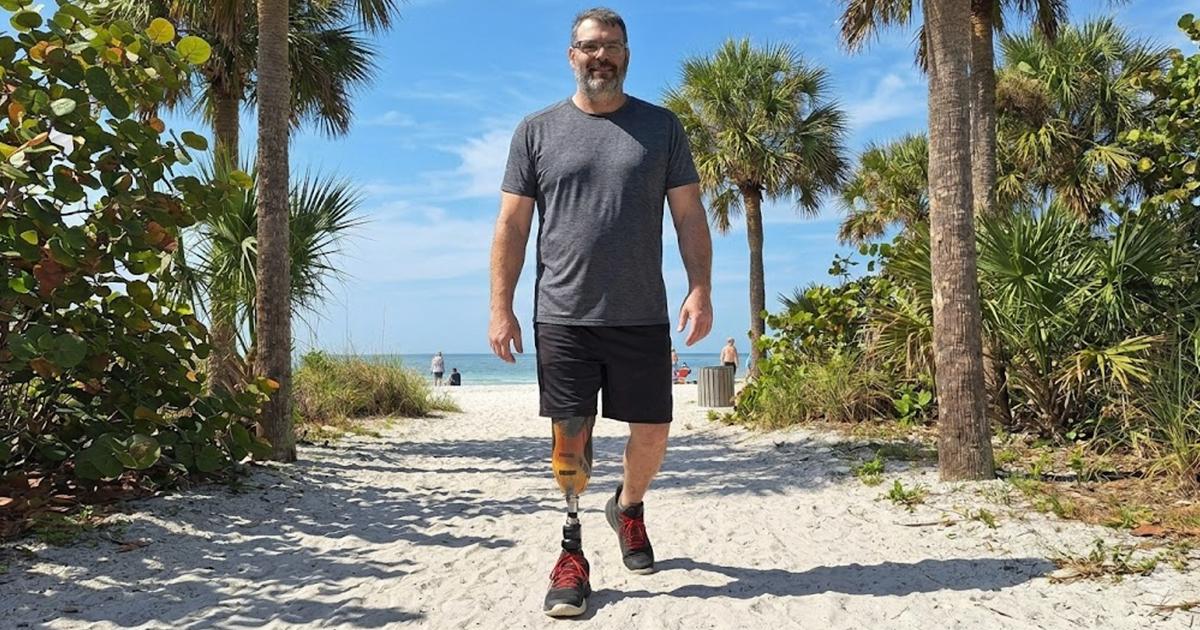

Nobody warned me about this one. When I was going through everything in those early months — learning to walk again, figuring out my shrinker routine, adjusting to a completely new version of my body — I was so focused on the big stuff that I didn't think much about what the Florida climate was going to do to my prosthetic situation specifically.
Then summer hit.
If you're a below-the-knee amputee living in Southwest Florida — or really anywhere in a hot, humid climate — you already know what I'm talking about. The sweat. The socket fit shifting throughout the day. The liner issues. The skin breakdown that nobody really prepares you for. It's a whole additional layer of adaptation on top of everything else you're already managing.
Here's what I've learned living through it, and what actually helps.
The Sweat Problem Is Real and It's Constant
Let me just say it plainly — residual limb sweating in a prosthetic socket in Florida summer heat is one of the most frustrating daily realities of being an amputee here. Your residual limb is enclosed in a silicone liner and then a socket, with limited to no airflow, while the rest of your body is sweating in 95-degree heat and 90% humidity.
The result is a level of perspiration that affects everything — your suspension, your comfort, your skin, and your confidence walking into a situation where you're not sure how your leg is going to behave.
What actually helps me:
- Antiperspirant on the residual limb — yes, actual antiperspirant, not just deodorant. Applied to the residual limb before putting on the liner, it reduces sweating significantly. My prosthetist recommended this and it made a real difference. Talk to your care team before trying this to make sure it's appropriate for your skin.
- Liner rotation — if you can afford a second liner, rotating between two gives each one time to fully dry out between uses. A liner that's been sweated in all day and put back on the next morning without fully drying is asking for skin issues.
- Sweat management socks — there are prosthetic socks with moisture-wicking properties specifically designed for this. They're not a perfect solution but they help.
- Mid-day liner cleaning — on really hot days I'll take a few minutes to remove the liner, wipe everything down with a clean cloth, and let things breathe for a bit before putting it back on. It's a little inconvenient but the afternoon comfort difference is worth it.
Socket Fit Changes Throughout a Florida Day
Here's something that took me a while to fully understand — socket fit is not static. It changes throughout the day based on activity level, temperature, how much you're sweating, and how much your residual limb volume fluctuates.
In Florida heat specifically, I notice my fit can feel great in the morning and noticeably looser by afternoon, especially on days where I'm outside or more active. Volume loss from sweating and the general effects of heat on tissue means the socket that fit perfectly at 9AM might feel sloppy by 2PM.
What helps:
- Prosthetic socks for volume management — adding a ply or half-ply when you notice the fit loosening is the most immediate solution. I keep socks with me and don't leave home without them.
- Pay attention to gait changes — if you start noticing your gait shifting or you feel less stable, check your fit before assuming it's a technique issue. Nine times out of ten when my gait goes off in the afternoon it's a volume issue not a skill issue.
- Communicate with your prosthetist about seasonal fit — I've found that my socket needs slight adjustments seasonally here in Florida. What fits well in January might need attention by July. Don't tough it out — call your prosthetist.
Skin Breakdown and Heat Rash — The Part Nobody Talks About Enough
The skin on your residual limb is doing a job it was never designed to do — bearing weight, experiencing friction, and living inside a hot enclosed environment for most of your waking hours. In Florida heat that environment gets significantly more hostile.
Heat rash, folliculitis, skin breakdown at pressure points, and general irritation are things I deal with and things I've heard from other amputees in warm climates regularly. Here's what I've found helps:
- Liner hygiene is non-negotiable — wash your liner every single night with mild soap and water, rinse thoroughly, and let it dry completely before the next morning. In Florida I sometimes wash it twice on particularly sweaty days.
- Residual limb skin care — keeping the skin clean, moisturized but not overly so, and inspecting it daily catches small issues before they become big ones. I check my residual limb every night the same way I check my liner — it's just part of the routine now.
- Let it breathe at night — sleeping without the liner whenever possible gives your skin the recovery time it needs. This was one of the best habits I developed early on.
- Don't ignore skin changes — redness, irritation, open areas, or changes in skin texture need attention from your prosthetist or care team, not just powering through. In Florida heat small skin issues can escalate faster than you'd expect.
Water, Swimming, and the Florida Lifestyle Question
One of the questions I get asked most by other amputees who are thinking about moving to or visiting Florida is about water activities — pools, beaches, boating. This is Southwest Florida and the water is everywhere.
The honest answer is that it depends significantly on your prosthetic setup and what your prosthetist and care team recommend for your specific situation. What I will say is that there are waterproof prosthetic options, there are ways to enjoy the water with a traditional setup, and there are also times when going without the prosthetic in and around water is completely fine and actually gives your residual limb a great opportunity to breathe.
Don't let the water piece of Florida living feel like a closed door. Have that conversation with your prosthetist specifically about your lifestyle here and what options make sense for you.
The Bottom Line
Living as an amputee in Southwest Florida comes with a specific set of climate challenges that you don't hear talked about much in general amputee content. Most of what's out there is written for or by people in temperate climates, and the Florida reality is just different.
You can absolutely thrive here — I do — but it takes building habits and routines that account for the heat and humidity specifically. The sweating, the fit changes, the skin care — once you have systems for all of it, it becomes just another part of your day rather than a constant battle.
If you're a Florida amputee and you've figured out something that works for you that I haven't mentioned here, drop it in the comments. This community is one of the best parts of what I do and I learn from you all the time.
Small steps today. Big victories tomorrow.