



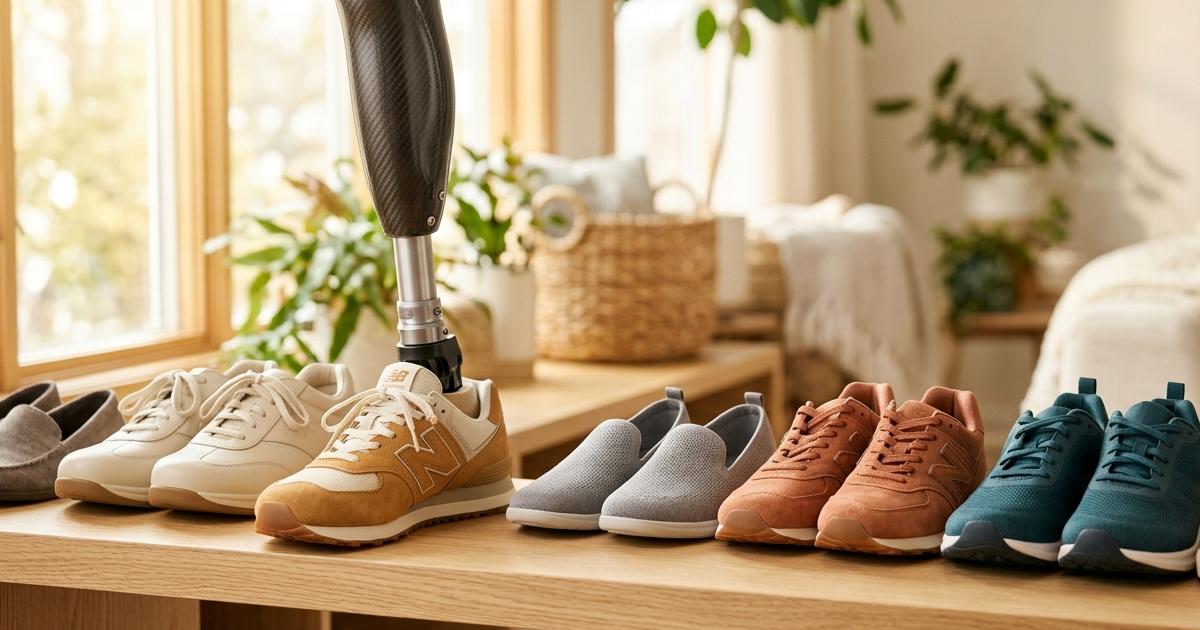

If you had told me three years ago that buying shoes would become one of the most complicated parts of my life, I would have laughed. But here I am, a below-knee amputee living in Cape Coral, Florida, and I can tell you with complete honesty that footwear is a topic that doesn't get nearly enough attention in the amputee world. It took me trial and error, a lot of wasted money, and some really frustrating shopping trips to finally figure out what works for me. So let me save you some of that headache.
Dede has been right there with me through every shoe store visit, every online return, and every moment of me standing in the middle of a store aisle trying to figure out if a shoe is even going to work with my prosthetic foot. She's been patient, encouraging, and honestly a better sport about it than I probably deserved on some of those harder days. This one is for every amputee out there who has stood in a shoe aisle feeling completely lost.
Why Footwear Matters More Than You Think
Before my amputation, I grabbed shoes off the rack without much thought. My size, my style, done. Now every single shoe purchase involves a whole different set of questions. The footwear you choose directly affects how your prosthetic foot performs, how your gait looks and feels, and ultimately how comfortable you are going to be throughout the day.
Most prosthetic feet are designed around a specific heel height. That height is built into the alignment of the foot itself. When you change the heel height of the shoe you're wearing, you're changing the biomechanics of how that prosthetic foot works. A shoe with a higher heel than what your foot is set up for can throw off your whole gait, put stress on your residual limb, and even cause back or hip pain over time. This was one of those things my prosthetist told me early on, and I honestly didn't fully appreciate it until I started noticing problems.
The Heel Height Problem
My prosthetic foot is set up for a relatively flat to low-profile heel. That means I have to be really mindful when I'm looking at shoes. Even what looks like a modest heel can be enough to change things. I've learned to look carefully at the actual heel drop of a shoe before I buy it, and when I'm unsure, I bring it up with my prosthetist. Some prosthetists can adjust the alignment slightly to accommodate different heel heights, but it's not something you want to be constantly chasing.
Why Your Prosthetic Side and Your Sound Side Need to Match
Here's something a lot of new amputees don't think about right away. Whatever shoe you put on your prosthetic foot needs to match what's on your sound side foot. They need to be the same heel height, the same thickness of sole, everything. Because if they're different, your hips and your back are going to feel it. I've met amputees who were dealing with chronic lower back pain and it traced back to mismatched footwear. Pay attention to this. It matters more than it seems.
What I Look for in a Shoe Now
My whole approach to shoe shopping has changed completely. Here's the honest breakdown of what I think about now every time I'm looking at a new pair of shoes.
- Consistent heel height: I stay in the range my prosthetic foot is set up for, usually flat to a very low heel drop. Running shoes and walking shoes in this range work really well for me.
- Removable insoles: Some prosthetic feet or foot covers are thick enough that removing the factory insole gives you a much better fit inside the shoe. I always check whether the insole comes out.
- Wider toe box: Depending on your prosthetic foot cover or cosmetic cover, a wider toe box gives a more natural look and better fit inside the shoe.
- Durable construction: I've noticed that some prosthetic feet can wear through shoe soles faster than a natural foot would, especially on the heel or toe depending on your gait. Tougher soles last longer.
- Slip-on options for casual wear: On days when I just need something easy, a good slip-on without a complicated lacing system is a lifesaver. Especially if you're having a tough liner or socket day.
- Buying two pairs: This one stings a little financially, but hear me out. If you wear a different shoe size on each foot because of the prosthetic foot size versus your natural foot size, sometimes buying two pairs and swapping is the only way to go. Some companies and organizations actually have programs to help with this.
The Amputee-Friendly Shoe Brands Worth Knowing About
I'm not here to be a commercial for any specific brand, but I do want to point out that some brands have genuinely become favorites in the amputee community for good reasons. Brands that offer consistent sizing, a solid range of heel heights, and removable insoles tend to come up over and over again in the amputee groups I'm part of. Brooks, New Balance, and HOKA are names I hear a lot from below-knee amputees who are active and need a reliable everyday shoe.
For more casual or dress occasions, it gets trickier. I've had to accept that some styles just aren't practical for me right now, and that's okay. My priorities are comfort, function, and not messing with my gait. Style is still in the mix, don't get me wrong, but it's third on the list now instead of first.
Shoe Shopping Online vs. In Store
There are arguments for both. Shopping in store lets me actually try the shoe on with my prosthetic and walk around to feel how it performs. That's valuable. But in store shopping also means dealing with sales staff who don't always know what to say or do when they see the prosthetic, and sometimes the selection is limited.
Online shopping gives me access to way more options, but the return process can be a hassle. What I've started doing is identifying a shoe I want online, then going to find it in a store to try it before I buy. Not always possible, but when it is, it saves a lot of back and forth.
A Word About Going Barefoot and Water Shoes
Living in Florida means I'm around water a lot. The beach, the pool, outdoor areas where barefoot or sandal life is just part of the culture. For water shoes, I look for something with a flat sole that stays on securely. A lot of standard flip flops don't work well with a prosthetic foot because there's nothing to hold them on. I've had better luck with water shoes that strap around the foot more completely, or sandals with an adjustable strap system.
And going completely barefoot on the prosthetic, meaning just the bare prosthetic foot itself, is something I do sometimes around the house or at the pool edge. The important thing there is just being aware of the surface and temperature, especially here in Florida where concrete gets blazing hot in the summer. Your prosthetic foot doesn't feel heat the way your natural foot does, so you have to use your eyes instead.
Final Thoughts From the Shoe Aisle
I'm not going to pretend that shoe shopping is fun for me the way it might be for some people. It takes more thought, more planning, and sometimes more money than it used to. But I've gotten a lot better at it, and so can you. Work with your prosthetist when you have questions about heel height or fit. Connect with other amputees in online groups and ask what they're wearing. And give yourself grace when you buy a pair that doesn't work out. It happens to all of us.
Dede and I have turned some of our shoe shopping trips into a bit of an adventure now. There's something to be said for finding the humor in it and moving forward together. If you've got questions about footwear or want to share what's been working for you, drop a comment below or reach out through the community. We're all figuring this out together.