



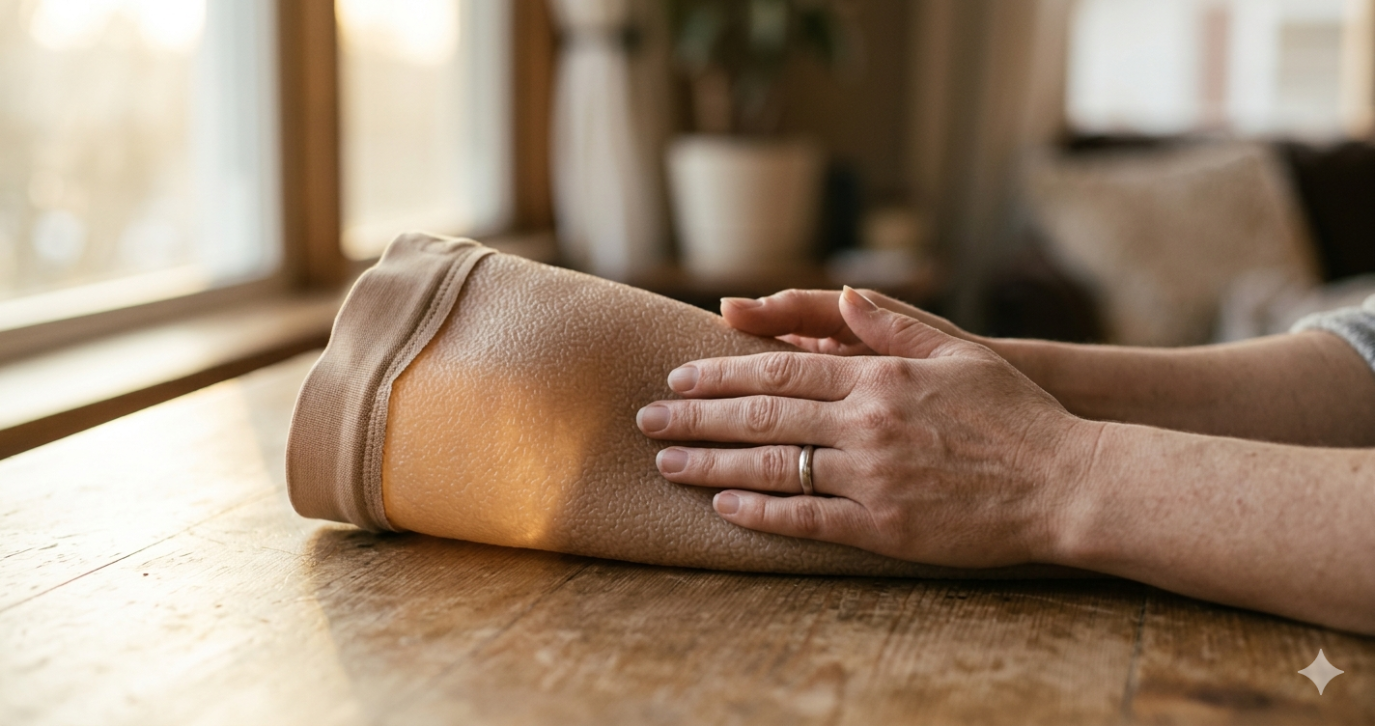

If you are a below-the-knee amputee, your liner is not just an accessory. It is one of the most important pieces of equipment you will ever put on your body. I did not fully understand that when I first started this journey. I thought the liner was just that rubbery sleeve thing you roll on before the socket, kind of like an afterthought. Three years in, I can tell you with absolute certainty that your liner can make or break your entire day.
I want to talk honestly about prosthetic liners today because this is a topic that does not get nearly enough attention. Your prosthetist will fit you with one, show you how to roll it on, and send you on your way. But there is so much more to the story. Dede actually reminded me the other day how many times in my first year I came home frustrated, with skin irritation or a socket that just would not sit right, and so much of it traced back to liner issues I did not even know I had.
What a Prosthetic Liner Actually Does
Let's start with the basics because I think a lot of new amputees do not get a clear explanation of this. A prosthetic liner serves several critical functions all at once, and understanding those functions helps you take better care of it and better care of yourself.
It Creates a Comfortable Interface
The liner acts as a cushion between your residual limb and the hard prosthetic socket. Your skin is not meant to be pressed directly against a rigid socket all day. The liner, typically made from silicone, urethane, or a hybrid material, absorbs shock and distributes pressure more evenly across your limb. Without it, you would have skin breakdown almost immediately.
It Helps Suspend the Prosthesis
Many prosthetic systems use the liner as part of the suspension mechanism, meaning it is part of what keeps your leg attached to your body. Some liners have a pin at the bottom that locks into the socket. Others rely on suction or a seal system. Understanding your specific suspension type matters a lot, because if your liner is worn out or not sealing properly, your leg is not staying on the way it should.
It Protects Your Skin
Your residual limb is working hard every single day. The skin there is under constant friction, pressure, and movement. A good liner helps protect against blisters, abrasions, and pressure sores. A worn-out or poorly fitting liner does the opposite. It becomes a source of damage rather than protection.
The Different Types of Liners and Why It Matters
Not all liners are the same, and this tripped me up early on. I just assumed whatever I was given was what I needed. But there are real differences between liner materials, and they affect comfort, durability, and how your skin responds.
Silicone Liners
Silicone liners are probably the most common. They are durable, provide excellent suspension, and work well for many amputees. However, some people find them a bit stiff and they can run warm, which living in Cape Coral is no small thing. Silicone is also on the heavier end of liner options.
Urethane Liners
Urethane liners tend to be softer and more flexible than silicone. Many people find them more comfortable, especially those with sensitive skin. They conform a little more naturally to the shape of your limb. The tradeoff is that they can be less durable and may wear out faster.
Hybrid Liners
Hybrid liners combine materials, often with a softer inner layer for skin comfort and a more durable outer layer. These are increasingly popular and a lot of amputees find them to be a good middle ground. My current liner is a hybrid and it has been a game changer for me personally.
Fabric-Covered Liners
Some liners have a fabric outer layer, which can make donning and doffing easier, reduce heat buildup, and make it simpler to slide the liner into the socket. If you struggle with the rolling-on process or with heat, it might be worth asking your prosthetist about this option.
Liner Care and Maintenance: The Stuff That Actually Matters
Here is where I want to get really practical, because taking care of your liner directly affects your skin health, your socket fit, and how long your liner lasts. I learned most of this the hard way.
Wash Your Liner Every Single Day
I cannot stress this enough. Your liner spends hours against your skin collecting sweat, oils, dead skin cells, and bacteria. If you are not washing it daily, you are setting yourself up for skin irritation, odor, and potentially serious skin infections. I wash mine every night with mild soap and warm water, rinse it thoroughly, turn it inside out, and let it air dry overnight. Do not use harsh soaps or alcohol-based cleaners. They break down the liner material faster and can irritate your skin.
Inspect Your Liner Regularly
Get in the habit of looking your liner over carefully. You are looking for tears, thin spots, holes, or areas where the material feels different. A compromised liner is not protecting you the way it should. Even a tiny hole can affect suction suspension and cause skin issues. Hold it up to the light if you need to, you will be surprised what you can spot that way.
Know When to Replace It
Liners do not last forever. Most manufacturers recommend replacing them every three to six months with regular daily use. But that timeline varies depending on your activity level, your body chemistry, and how well you care for it. Do not wait until your liner is visibly falling apart. If you notice your socket fit changing, more pistoning, increased sweating, or skin irritation without another clear cause, your liner may be past its prime. Talk to your prosthetist. Insurance typically covers liner replacements, though the process can require some patience.
Donning Technique Matters More Than You Think
The way you roll your liner on affects everything that follows. You want to roll it on slowly and evenly, working out any air bubbles as you go. Air trapped inside the liner affects how the liner sits against your skin and how it interfaces with the socket. I spent months not realizing I was trapping air at the end of my residual limb and wondering why my fit felt inconsistent throughout the day.
Common Liner Problems and What to Do About Them
Let me share some of the issues I have personally dealt with and what helped me work through them.
- Skin redness or irritation: This can signal a reaction to the liner material, a fit issue, or the liner is simply worn out. Start by checking for visible wear and talk to your prosthetist before assuming anything else.
- Excessive sweating: Living in Florida makes this a constant battle. Liner socks designed to wick moisture, antiperspirant products made for residual limbs, and taking a mid-day doff and wipe-down can all help.
- Odor: Odor usually means bacteria. Consistent daily washing is the first fix. There are also liner-specific deodorant products available that are safe for the material.
- Liner rolling or bunching: If your liner is shifting or rolling down during activity, it could be a size issue or a sign the liner has lost its elasticity and needs replacing.
- Pin not engaging properly: If you use a pin lock system and find the pin not clicking in cleanly, inspect both the pin and the locking mechanism in your socket. Sometimes it is debris in the lock, sometimes it is a worn pin, and sometimes it is liner stretch indicating replacement time.
Have the Honest Conversation With Your Prosthetist
I want to close with this because it is important. Your prosthetist cannot help you if they do not know what you are experiencing. For a long time I just accepted discomfort as part of the deal. I thought if something was not catastrophically wrong, it was probably fine. That mindset cost me a lot of unnecessary skin issues and frustration.
Your prosthetist wants to know if your liner is not working for you. There are many liner options on the market and finding the right one for your specific limb shape, activity level, skin type, and lifestyle is a process. Do not be afraid to say the liner you have is not working. Do not be afraid to ask about alternatives. That is literally what they are there for.
Dede always reminds me that being your own advocate in this process is not being difficult. It is being smart. You are the one wearing this equipment every day. You know your body better than anyone. Use that knowledge and speak up.
If you are newer to this journey and feeling overwhelmed by all of this, please hear me when I say it gets easier. You learn your body. You learn the equipment. You find your routine. And one day you will be the one explaining liner care to someone just starting out, and you will realize how far you have come. That day is worth working toward.