



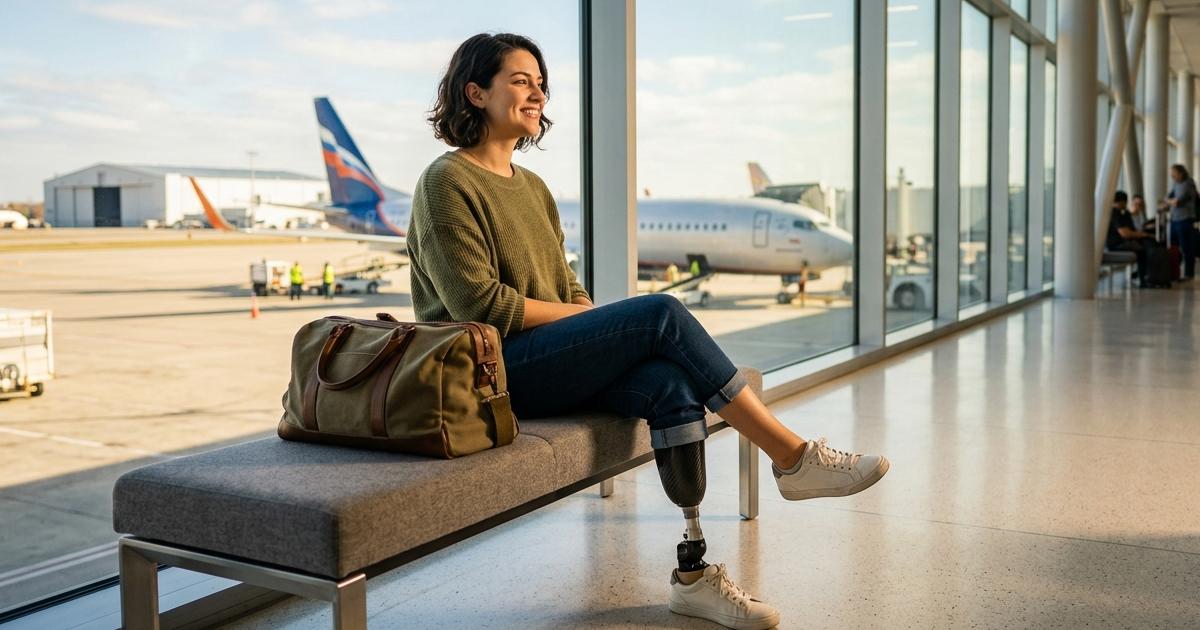

Before my amputation, getting on a plane was just something you did. You showed up, shuffled through security, found your seat, and didn't think much about it. Now, as a below-knee amputee, traveling takes a little more planning, a little more patience, and honestly, a little more courage the first time you do it. But here's what I want you to know — it is absolutely still doable, and it can still be enjoyable. Dede and I have figured out a system that works for us, and I'm going to share everything I've learned so you don't have to figure it out the hard way.
Getting Through Airport Security as an Amputee
Let's start with the part that makes most new amputees nervous — the TSA checkpoint. The first time I went through security after getting my prosthetic, I genuinely didn't know what to expect. Would the metal in my prosthetic set off alarms? Would I have to take it off? Would it be embarrassing? I had all of those questions swirling in my head.
Here's the honest answer: yes, your prosthetic will likely set off the metal detector or the full-body scanner. That's completely normal and nothing to stress about. What happens next is that a TSA agent will ask to do a physical inspection of your prosthetic leg. They will swab it for explosive residue and pat down the area around it. It sounds more invasive than it actually is. The agents I have dealt with have been respectful and professional the majority of the time.
Tips to Make Security Smoother
- You can request a private screening room if you prefer more privacy during the inspection. This is your right and you should never feel embarrassed to ask for it.
- Arrive at the airport earlier than you normally would, at least an extra 30 minutes, to give yourself time at the checkpoint without feeling rushed.
- Let the TSA agent know upfront that you have a prosthetic limb before you step into the scanner. A simple heads-up makes the whole process faster and friendlier.
- You do NOT have to remove your prosthetic leg. Do not let anyone tell you otherwise. You have the right to keep it on.
- Carry a copy of your prosthetist's documentation or a medical card that explains your amputation and prosthetic device. It is not required, but it can speed things along.
- TSA Cares is a program you can call ahead of time at 1-855-787-2227 to let them know you are traveling with a disability or medical device. They can have a passenger support specialist meet you at the checkpoint.
Once I started using these strategies, security went from being my most dreaded part of travel to just another step in the process. You adapt. You get more confident every time you do it.
Managing Comfort During the Flight Itself
Getting through security is one thing. Sitting in an airplane seat for several hours as a below-knee amputee is a whole other challenge. I want to be real with you — it can be uncomfortable if you're not prepared. Long periods of sitting can cause swelling in your residual limb, pressure sores if your liner or socket isn't fitting right that day, and general soreness. But there are things you can do to make it much more manageable.
Before You Board
If possible, book an aisle seat. This gives you the ability to stretch your leg out into the aisle periodically and makes it easier to get up and move around without climbing over people. Some airlines also offer bulkhead seats with extra legroom — those are worth the upgrade if your budget allows it. When I fly, that extra few inches of space makes a real difference in how my leg feels when we land.
During the Flight
I make it a habit to get up and walk the aisle at least once every hour on longer flights. This helps with circulation, reduces swelling, and keeps me from feeling stiff and locked up when we land. I also do gentle ankle and calf flexes while sitting, focusing on my intact leg especially, to keep blood moving.
Another thing worth mentioning is that cabin air is extremely dry, and staying hydrated matters more than people realize. Dehydration can actually make swelling and residual limb discomfort worse. I drink water consistently throughout the flight and avoid alcohol on longer trips because of how much it contributes to dehydration.
If your residual limb tends to swell during travel, talk to your prosthetist before your trip. They may suggest bringing an extra liner sock or two to accommodate volume changes during the flight. I keep a small bag in my carry-on with a spare liner, some residual limb wipes, and a small amount of skin lotion for when we land. It's a simple kit that has saved me more than once.
Planning Ahead at Your Destination
The travel planning doesn't stop once you land. Where you're staying and what you plan to do matters a lot when you're an amputee. I've learned to ask a few extra questions before I book anything.
Choosing Accommodations
When Dede and I book a hotel, I always check for ground-floor availability or elevator access. I look for roll-in showers or at minimum a shower bench option. Walking on slippery surfaces is one of the higher-risk situations for amputees, and a slick hotel bathtub is not something I want to navigate without thinking it through first. Most hotels will accommodate accessibility requests — you just have to ask directly when you call or book.
Knowing the Terrain
Think about where you're going and what the ground is like. Cobblestone streets in a historic city are beautiful but they are not prosthetic-friendly at a fast pace. Sand on a beach requires more energy and attention to foot placement. None of that means you shouldn't go — it just means you pace yourself and plan accordingly. I've walked on plenty of uneven surfaces since my amputation, and every one of them taught me something about how my body and my prosthetic work together.
Packing Smart
I always pack my prosthetic supplies in my carry-on, never in checked luggage. If your bag gets lost, you cannot replace your liner or your suspension sleeve at baggage claim. Keep the essentials with you. That means your spare liner, your suspension sleeve if you use one, skin care supplies for your residual limb, and any medications you take for pain or nerve issues.
I also bring a lightweight waterproof cover for my prosthetic foot if we're going somewhere near water. It's not a full waterproof prosthetic, but it gives me some protection for brief splashes or unexpected rain. If you're planning a beach or water-heavy trip, that might be the time to talk to your prosthetist about a dedicated water activity leg. We'll dive deeper into that topic in a future post.
The Mindset Piece Nobody Talks About
Here's something I want to say directly to anyone who hasn't traveled since their amputation and is wondering whether they still can. You absolutely can. The world is still out there waiting for you. Yes, there will be moments that require more planning and more patience. Yes, you might hit a situation you didn't anticipate and have to problem-solve on the fly. But that is not so different from how the rest of life as an amputee works.
The first trip Dede and I took after my amputation, I was nervous right up until the moment we landed at our destination. And then something shifted. I remembered that I had done hard things before. I remembered that getting on that plane at all was a win. You get to decide what your life looks like going forward. Travel is still on the table. Go get it.